
Dropshipping Suppliers: Beginner Guide for 2026
Beginner guide to dropshipping suppliers in 2026, including supplier types, vetting questions, shipping checks, red flags, apps, margins, and product launch workflows.
Dropshipping suppliers decide whether your store can keep its promises. Beginners often focus on product ideas first, but supplier reliability affects delivery time, product quality, refunds, reviews, and customer support. This guide shows how to evaluate suppliers before a product enters your launch queue.
Targets dropshipping suppliers, best dropshipping suppliers, and beginner supplier vetting searches.
Use the page to compare supplier options before importing products or running ads.
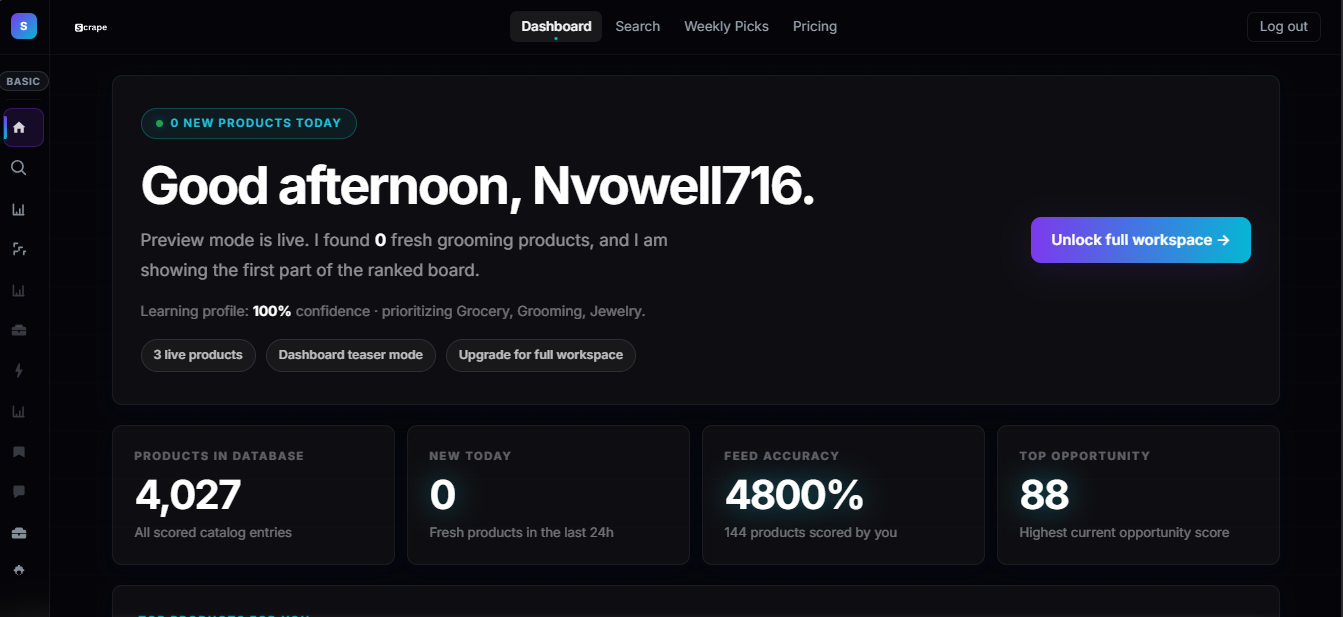
Scrape helps connect supplier quality to product demand, competitor pressure, and margin decisions.
Supplier vetting example: cheap is not enough
Supplier pages become useful when they protect the customer experience. Price matters, but delivery reliability and support risk decide whether the product can scale.
Worked example
A $2 cheaper supplier can be worse if tracking is inconsistent, packaging is poor, or disputes take too long to resolve.
| Signal | Example read | Operator takeaway |
|---|---|---|
| Sample quality | Order before scaling | Check material, packaging, instructions, and defects. |
| Delivery promise | Match the store policy | Do not advertise faster shipping than the supplier can support. |
| Communication | Response under pressure | Slow replies become expensive once orders rise. |
| Redundancy | Backup supplier ready | Avoid one supplier controlling the whole product test. |
Types of dropshipping suppliers
Dropshipping suppliers can include manufacturers, wholesalers, supplier apps, print-on-demand partners, domestic warehouses, overseas marketplaces, and private agents. Each type has tradeoffs in cost, speed, catalog depth, branding control, and communication.
Beginners should not choose a supplier only because the catalog is large. The better question is whether the supplier can support the product, customer promise, and margin you need.
- Supplier apps can simplify imports and fulfillment.
- Domestic suppliers can improve shipping speed but may cost more.
- Overseas suppliers can offer range and price but require stronger delivery checks.
- Agents and private suppliers can help after demand is proven.
Questions to ask dropshipping suppliers
Supplier vetting should be practical. Ask about product cost, shipping cost, delivery time, tracking, stock updates, return handling, packaging, defect rates, and response time. Then compare those answers with samples or small test orders when possible.
A supplier that answers clearly is easier to work with than a supplier that only looks cheap. Hidden delays and poor communication often cost more than a higher unit price.
- How long does fulfillment take after an order is placed?
- What tracking is provided and when is it available?
- How are returns, defects, and damaged packages handled?
- Can invoices or packaging avoid confusing third-party branding?
- What happens when stock runs out?
Supplier red flags beginners should avoid
Supplier red flags usually show up before scale if you look closely. Slow replies, vague shipping times, inconsistent stock, unclear returns, copied product photos, and no tracking details are early warnings.
Beginners should reject suppliers that cannot support the customer promise. A cheap supplier can become expensive once refunds, chargebacks, bad reviews, and support time are included.
- No clear delivery window.
- No reliable tracking.
- Weak or evasive communication.
- Unclear return and defect process.
- Product photos or descriptions that do not match the actual item.
How Scrape helps with supplier decisions
Scrape helps beginners avoid separating product excitement from supplier reality. A product should move forward only when demand, margin, competitor context, and supplier reliability are all strong enough.
That makes supplier selection part of the product research workflow, not an afterthought once ads are already running.
- Use supplier notes alongside product demand signals.
- Compare supplier cost against realistic selling price.
- Reject products where fulfillment risk is too high.
- Revisit supplier quality after every test order.
Direct answer
Dropshipping Suppliers Beginner for is useful for dropshipping when it helps a beginner make a safer product, supplier, traffic, or store decision.
- Who it helps: beginners choosing suppliers or private-label partners.
- Decision it supports: whether a supplier is safe enough to contact, sample, negotiate with, or reject.
- Metrics to check: sample defect rate, shipping reliability, response speed, refund exposure, and landed cost.
Dropshipping Suppliers Beginner for for beginners
Plain-English definition
Dropshipping Suppliers Beginner for is a way to make a clearer dropshipping decision before you spend money on products, suppliers, ads, or store changes.
For a beginner, the goal is simple: understand what the signal means, check whether it fits your store, and avoid acting on hype before the numbers and execution path make sense. A beginner comparing two beauty suppliers should ask for delivery windows, packaging photos, refund rules, tracking quality, and sample consistency before importing products.
Beginner steps
- Start by writing the exact decision you want Dropshipping Suppliers Beginner for to help with.
- Check demand, margin, competition, supplier reliability, and customer trust before you launch.
- Choose one next action: test, improve, monitor, or reject the opportunity.
Beginner mistakes to avoid
- Copying a product just because another store appears to be selling it.
- Ignoring shipping, refund, support, and ad learning costs.
- Reading strategy content without turning it into a specific next step.
Dropshipping Suppliers Beginner for evidence checklist
This section makes the page more useful than a generic dropshipping suppliers beginner for article. Use it to separate real operating evidence from keyword-level advice.
What to check
- Use the guide to define the topic, then move into examples and action thresholds.
- Check whether the advice applies to your product type, supplier model, and traffic channel.
- Finish with one decision rather than more reading.
Authority signals to build
- Primary proof: sample defect rate, shipping reliability, response speed, refund exposure, and landed cost.
- Authority asset to add over time: supplier vetting templates, sample scorecards, and sourcing checklists.
- Internal proof: link this page to related product research, supplier, ad, and store optimization pages.
Decision system for operators
Use this section when the page starts influencing real product research, supplier selection, ad testing, store positioning, or channel expansion. The goal is to protect judgment while still moving quickly.
What to verify before acting
- The page's core claim matches live product, competitor, supplier, or channel evidence.
- The economics still work after fees, refunds, shipping, support, and ad learning costs.
- The decision is clear: whether a supplier is safe enough to contact, sample, negotiate with, or reject.
- The team can execute the next step this week without creating hidden operational debt.
What to ignore
- One-off viral examples with no repeatable buyer problem.
- Supplier promises that do not match delivery, tracking, packaging, or return reality.
- Metrics that look exciting but do not change a launch, pricing, or scaling decision.
What Scrape adds
- Live product and market context so research is connected to movement, not stale lists.
- Competitor and ad intelligence that helps separate real demand from surface-level noise.
- A repeatable way to review sample defect rate, shipping reliability, response speed, refund exposure, and landed cost.
- A single workspace for turning article-level strategy into an accountable operating queue.
Dropshipping suppliers workflow
Use this workflow before approving a supplier for a beginner product test.
Shortlist supplier options
Collect supplier apps, warehouses, marketplaces, or direct vendors that can actually fulfill the product.
Ask operational questions
Compare cost, shipping, tracking, packaging, returns, stock updates, and communication quality.
Test the supplier path
Order samples or run a small controlled order test when possible before scaling.
Approve with conditions
Approve suppliers only when the cost, delivery promise, quality, and support process match the store offer.
Dropshipping suppliers scorecard
Use this scorecard before connecting a supplier to a live product.
| Dimension | What to check | Why it matters |
|---|---|---|
| Delivery reliability | Can the supplier meet the delivery window your store communicates? | Delivery trust affects refunds, reviews, and repeat purchases. |
| Product quality | Does the item match the photos, description, and customer expectation? | Quality failures create support load and chargebacks. |
| Margin fit | Does supplier cost leave enough room after shipping, fees, ads, and returns? | Supplier cost determines whether product demand can become profit. |
| Communication | Does the supplier answer quickly and clearly when problems appear? | Good communication protects the store during exceptions. |
Frequently asked questions
What are dropshipping suppliers?
Dropshipping suppliers are manufacturers, wholesalers, warehouses, apps, agents, or fulfillment partners that ship products directly to your customers after orders are placed.
How do beginners find dropshipping suppliers?
Beginners can start with supplier apps, print-on-demand partners, domestic supplier directories, marketplaces, or direct outreach. The important step is vetting cost, shipping, tracking, returns, and quality.
What makes a good dropshipping supplier?
A good supplier has consistent product quality, clear shipping times, reliable tracking, responsive communication, fair return handling, and pricing that leaves room for margin.
Where does Scrape help with suppliers?
Scrape helps connect supplier decisions to product demand, competitor activity, and margin risk so beginners do not launch products that fulfillment cannot support.
Put the research into practice.
Turn the checklist on this page into a live decision inside Scrape. Inspect demand, margin, saturation, supplier risk, and ad activity in one workspace.