
Facebook Ads Guide: Strategic Guide for Ecommerce Operators
Facebook Ads Guide: Strategic Guide for Ecommerce Operators for operators who want to read creative velocity alongside conversion quality instead of worshipping vanity engagement. This bespoke guide covers signal quality, execution workflow, scorecards, FAQs, and how Scrape helps teams make better decisions around facebook ads guide.
Facebook Ads Guide: Strategic Guide for Ecommerce Operators is one of the highest-value search surfaces for Scrape because it sits close to a commercial decision. This page is written for teams buying traffic who need to understand what an ad is proving before spend gets heavier. The goal is to keep the page practical and useful for decision-ready research. The goal is to show what to review, what to ignore, and how to use Scrape to make a cleaner call around facebook ads guide.
Facebook Ads Guide matters most for teams buying traffic who need to understand what an ad is proving before spend gets heavier.
Strong teams review hook durability, post-click match, margin-safe scaling before they call a page-worthy signal a real opportunity.
Scrape compresses the review cycle so facebook ads guide can lead to a decision, not another tab left open until next week.
Ad test example: what to check before raising spend
Paid traffic should amplify a product decision, not replace it. Before increasing budget, compare creative response with post-click economics.
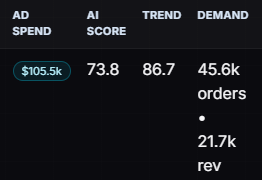
Worked example
A skincare accessory with a strong hook still fails if the product page does not answer size, delivery, safety, and refund objections.
| Signal | Example read | Operator takeaway |
|---|---|---|
| Hook rate | Is the opening earning attention? | Weak hooks waste testing budget. |
| CTR/CPC | Is traffic affordable enough? | Click cost must fit the margin model. |
| Add-to-cart rate | Does the page support the ad promise? | Mismatch signals bad product-page fit. |
| Comment quality | Are objections manageable? | Repeated trust objections need page or offer fixes. |
What facebook ads guide actually proves
Facebook Ads Guide is most useful when you treat ad movement as evidence of market response, not as a template library. A creative can pull attention and still be commercially weak if the click quality, landing page proof, or offer math collapses on the other side of the scroll.
The right habit is to review creative angle, repetition, spend persistence, and post-click fit together. That is how ad research starts producing better product and landing-page decisions instead of only prettier swipe files.
- Log the creative promise before you judge the creative itself.
- Check whether the ad is repeating because it converts or because the buyer keeps missing the point.
- Tie every ad insight back to post-click conversion quality.
Read velocity with context, not adrenaline
A fast-moving ad is interesting. A fast-moving ad that lines up with store activity, repeatable buyer pain, and margin-safe unit economics is actionable. Facebook Ads Guide should help you tell those two situations apart.
Scrape gives the operator a better chance of doing that because creative tracking sits next to product and store intelligence. Instead of guessing whether an ad is merely loud, you can ask whether the commercial stack beneath it looks healthy enough to copy, improve, or ignore.
- Prefer ads that survive more than one angle or one creator format.
- Pressure-test the landing page before copying the hook.
- Scale only when the economics hold after ad cost, returns, and support load.
A better review stack for facebook ads guide
The best review stack starts with the hook, then moves into audience fit, offer structure, and post-click proof. By the time you decide whether to test, you should know what the ad is promising, what the product is solving, and where the buyer might still lose confidence.
This is where teams usually waste budget. They copy the visible layer without documenting the commercial logic underneath it. Scrape helps correct that by making the research workflow more operational and less dependent on memory.
- Document the hook, objection, and offer before you launch a test.
- Track which creative angle survives more than one audience pocket.
- Retire ads quickly when the promise and product no longer match.
Turn the swipe file into a real brief
The goal of facebook ads guide is not inspiration. It is a usable brief. By the end of the review, the team should know which angle deserves a test, what proof the landing page must carry, and what threshold would justify a bigger spend decision.
That makes the research loop smaller, faster, and more accountable. Every great ad insight should improve a later operational call inside the store.
- End every review with one testable creative brief.
- Write down the success threshold before the campaign launches.
- Keep the research stack small enough to act on immediately.
Direct answer
Facebook Ads Strategic for Ecommerce Operators is useful for dropshipping when it helps a beginner make a safer product, supplier, traffic, or store decision.
- Who it helps: dropshippers deciding what to test with ad spend.
- Decision it supports: whether an angle, creative, product, or campaign deserves more budget.
- Metrics to check: hook rate, CTR, CPC, CPA, creative fatigue, comment sentiment, and contribution margin.
Facebook Ads Strategic for Ecommerce Operators for beginners
Plain-English definition
Facebook Ads Strategic for Ecommerce Operators is a way to make a clearer dropshipping decision before you spend money on products, suppliers, ads, or store changes.
For a beginner, the goal is simple: understand what the signal means, check whether it fits your store, and avoid acting on hype before the numbers and execution path make sense. A beginner testing a skincare product should compare hook rate, click cost, add-to-cart rate, offer clarity, and comment quality before raising spend.
Beginner steps
- Start by writing the exact decision you want Facebook Ads Strategic for Ecommerce Operators to help with.
- Check demand, margin, competition, supplier reliability, and customer trust before you launch.
- Choose one next action: test, improve, monitor, or reject the opportunity.
Beginner mistakes to avoid
- Copying a product just because another store appears to be selling it.
- Ignoring shipping, refund, support, and ad learning costs.
- Reading strategy content without turning it into a specific next step.
Facebook Ads Strategic for Ecommerce Operators evidence checklist
This section makes the page more useful than a generic facebook ads strategic for ecommerce operators article. Use it to separate real operating evidence from keyword-level advice.
What to check
- Use the guide to define the topic, then move into examples and action thresholds.
- Check whether the advice applies to your product type, supplier model, and traffic channel.
- Finish with one decision rather than more reading.
Authority signals to build
- Primary proof: hook rate, CTR, CPC, CPA, creative fatigue, comment sentiment, and contribution margin.
- Authority asset to add over time: creative teardown examples, ad-account diagnostics, and campaign review workflows.
- Internal proof: link this page to related product research, supplier, ad, and store optimization pages.
Decision system for operators
Use this section when the page starts influencing real product research, supplier selection, ad testing, store positioning, or channel expansion. The goal is to protect judgment while still moving quickly.
What to verify before acting
- The page's core claim matches live product, competitor, supplier, or channel evidence.
- The economics still work after fees, refunds, shipping, support, and ad learning costs.
- The decision is clear: whether an angle, creative, product, or campaign deserves more budget.
- The team can execute the next step this week without creating hidden operational debt.
What to ignore
- One-off viral examples with no repeatable buyer problem.
- Supplier promises that do not match delivery, tracking, packaging, or return reality.
- Metrics that look exciting but do not change a launch, pricing, or scaling decision.
What Scrape adds
- Live product and market context so research is connected to movement, not stale lists.
- Competitor and ad intelligence that helps separate real demand from surface-level noise.
- A repeatable way to review hook rate, CTR, CPC, CPA, creative fatigue, comment sentiment, and contribution margin.
- A single workspace for turning article-level strategy into an accountable operating queue.
Facebook Ads Guide review workflow
Use facebook ads guide to turn noisy ad data into a tighter testing brief for creative, landing page, and scaling decisions.
Document the hook before the asset
Name the promise, objection, and buyer emotion the ad is trying to capture before judging its production style.
Check post-click coherence
Review the landing page, offer, and proof stack so the team understands whether the ad promise can survive contact with the store.
Approve one clear test angle
Choose the one angle worth deploying now and set the threshold that would justify more spend or creative expansion.
Kill or scale with evidence
Use the result to either retire the angle fast or scale it responsibly once facebook ads guide proves durable.
Facebook Ads Guide operator scorecard
Run this scorecard before you turn facebook ads guide into a launch, sourcing, pricing, or ad decision. It is designed to protect judgment quality while the team moves faster.
| Dimension | What to check | Why it matters |
|---|---|---|
| Signal quality | Does facebook ads guide still look strong after you review more than one data surface? | Multi-surface confirmation filters out attractive but shallow signals. |
| Economic fit | Do the unit economics still work once ad cost, returns, and service load are considered? | Good research should improve profit quality, not just traffic or excitement. |
| Execution readiness | Can the store actually act on this decision cleanly in the current week? | The right opportunity still fails if the team cannot execute it responsibly. |
| Hook-to-page fit | Does the landing page fulfill the promise made by the ad? | Ad research is only useful when the promise can survive post-click. |
| Scaling safety | Would this angle still make sense if spend doubled next week? | This prevents teams from scaling creatives that only work at tiny volume. |
Frequently asked questions
Why is facebook ads guide worth reviewing inside Scrape instead of a generic blog post?
Facebook Ads Guide matters when it changes a real business decision. Scrape is built to connect the topic to product, store, ad, and sourcing intelligence so the review produces action instead of passive reading.
What should a strong facebook ads guide review produce?
A strong review ends with a ranked decision, a written reason for the decision, and a clear threshold for what must happen next before more money or effort is committed.
What is the most common mistake operators make with facebook ads guide?
The most common mistake is treating the surface signal as the whole story. The edge comes from reviewing context, economics, and execution readiness before the team acts.
How often should teams revisit facebook ads guide?
Most teams should review facebook ads guide weekly. That cadence is frequent enough to catch movement early while still leaving enough room for thoughtful comparison and post-launch learning.
Put the research into practice.
Turn the checklist on this page into a live decision inside Scrape. Inspect demand, margin, saturation, supplier risk, and ad activity in one workspace.